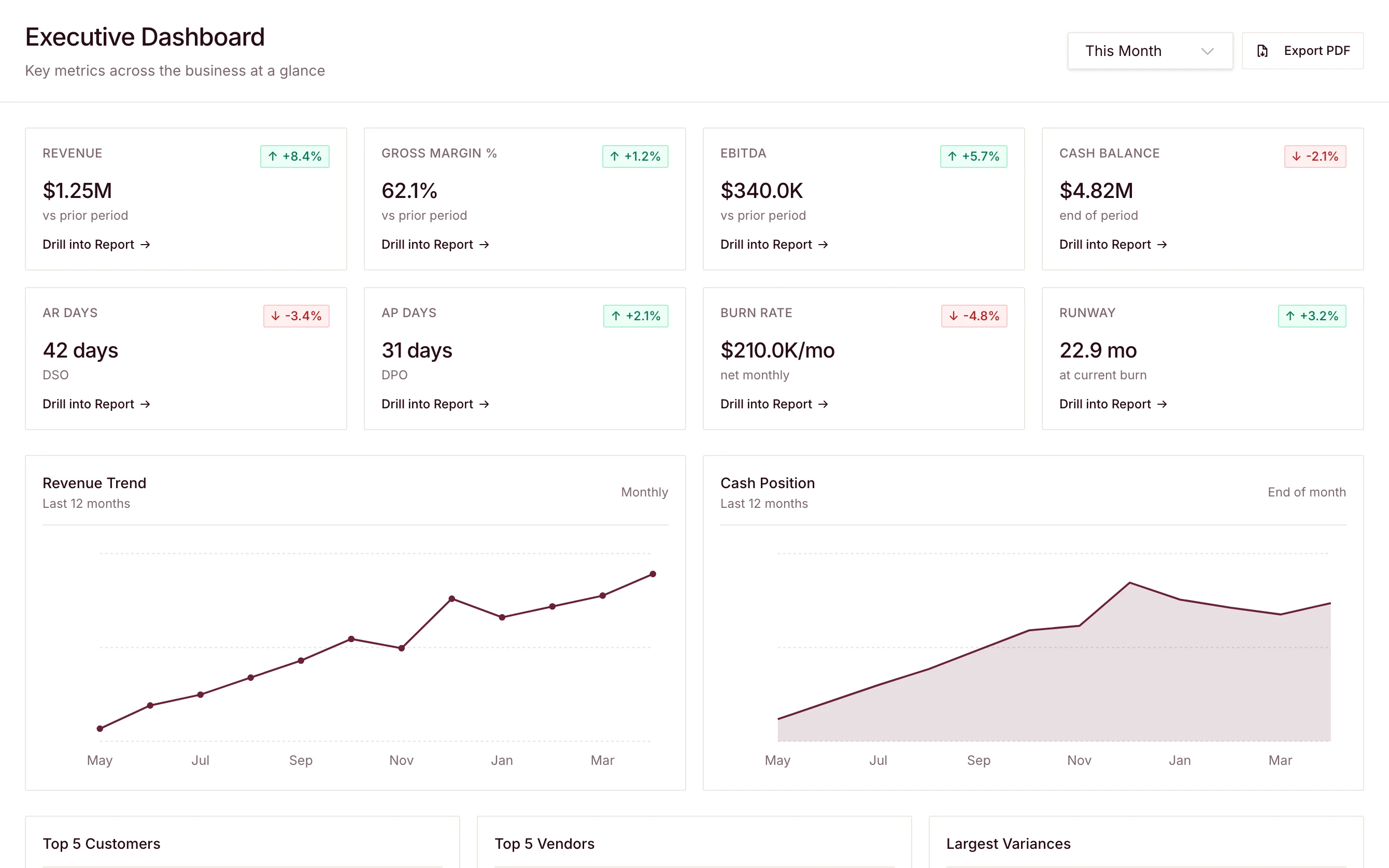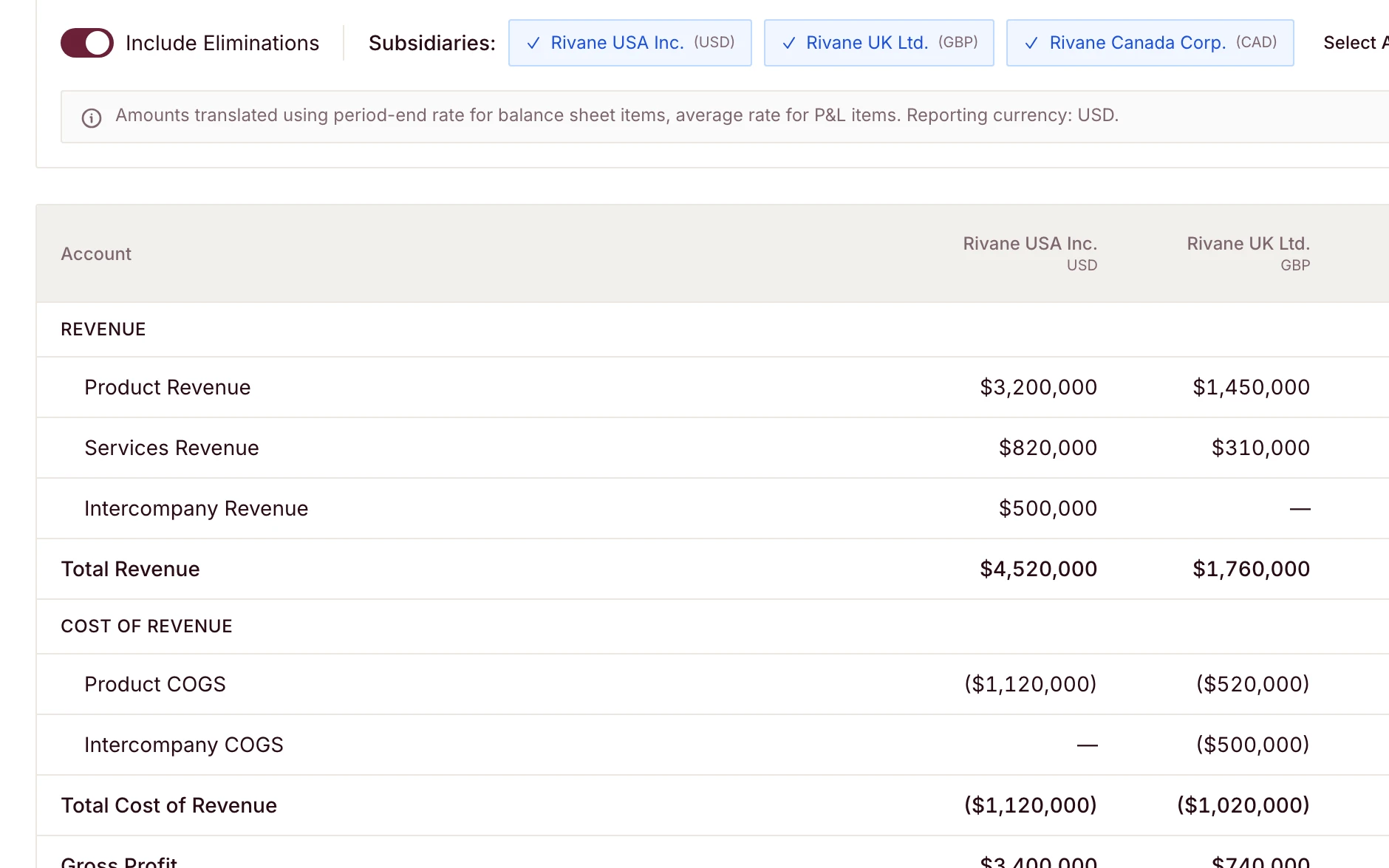
QuickBooks gets a great many businesses started, and it does that job well. Growing finance teams reach a point where they need multi-entity, revenue recognition and controls an auditor expects. That is the point Rivane is built for.
- multi-entity consolidation
- Native
- revenue recognition built in
- ASC 606
- common reasons teams move
- 4
Where QuickBooks fits
QuickBooks is built for small business bookkeeping. Common triggers to move are adding entities, needing ASC 606 revenue recognition, tightening controls for an audit, or spending too much of the close in spreadsheets.
Garbage in, garbage out. If data integrity is weak, machine generated variance analysis will be compromised.
 Jemma EwinCEO & Co‑Founder · Global CFOJemma Ewin, CEO & Co‑Founder · Global CFO
What changes when you move
- Merging company files to see the group
- Revenue tracked in spreadsheets
- A close run off a spreadsheet checklist
- Reports rebuilt outside the tool
- Native, real-time consolidation
- ASC 606 revenue from contracts
- Orchestrated close, continuous reconciliation
- Approval rules, segregation of duties, full audit trail
- Real multi-entity. Consolidate entities and currencies natively instead of merging files by hand.
- Close without spreadsheets. An orchestrated close and continuous reconciliation replace the monthly scramble.
- Audit-ready controls. Approval rules, segregation of duties and a full audit trail.

How the move works
- 1Rivane migrates your data
Chart of accounts, balances and transaction history are brought over and reconciled for you.
- 2Keep what works
Day-to-day workflows stay familiar, with the multi-entity, revenue and close automation added.
- 3Live in weeks
A guided step up in weeks, not a ground-up rebuild.
Clean data is the point of the move. Every balance is reconciled on the way in, so the reports you build on Rivane start from numbers you have already checked.
Further reading
Questions
When should we move off QuickBooks?
Common triggers are adding entities, needing ASC 606 revenue recognition, tightening controls for an audit, or spending too much of the close in spreadsheets.
Is Rivane much harder to use?
No. Day-to-day workflows stay familiar while Rivane automates the parts QuickBooks leaves manual.
Will my data come across?
Yes. Chart of accounts, balances and history are migrated and reconciled for you.
Does Rivane handle multiple entities and currencies?
Yes. Real-time consolidation and multi-currency are native.