QuickBooks is where many finance teams start. The moment to move up usually arrives with a second entity, an ASC 606 requirement, an audit or a close that lives in spreadsheets. Rivane migrates your QuickBooks data for you, so stepping up is not a rebuild.
- data sets migrated: chart of accounts, balances, history
- 3
- day-to-day workflows carry over
- Familiar
- to live, not a ground-up rebuild
- Weeks
When teams move
- More entities. Real-time consolidation and multi-currency are native, not a workaround.
- Revenue recognition. ASC 606 schedules run in the ledger.
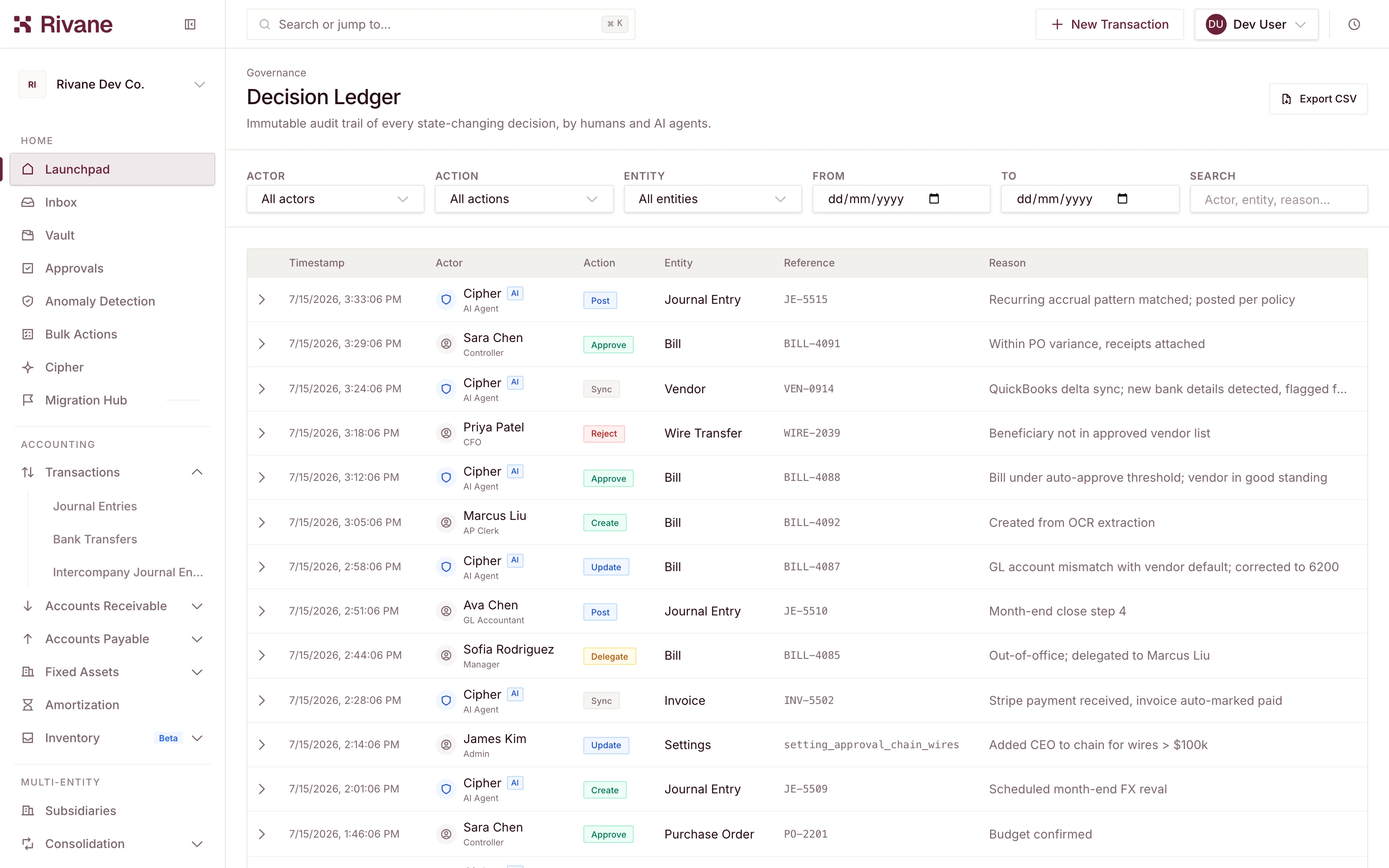
- Audit and controls. Every decision is on an immutable trail.
- Spreadsheet close. Close automation replaces the workbook.
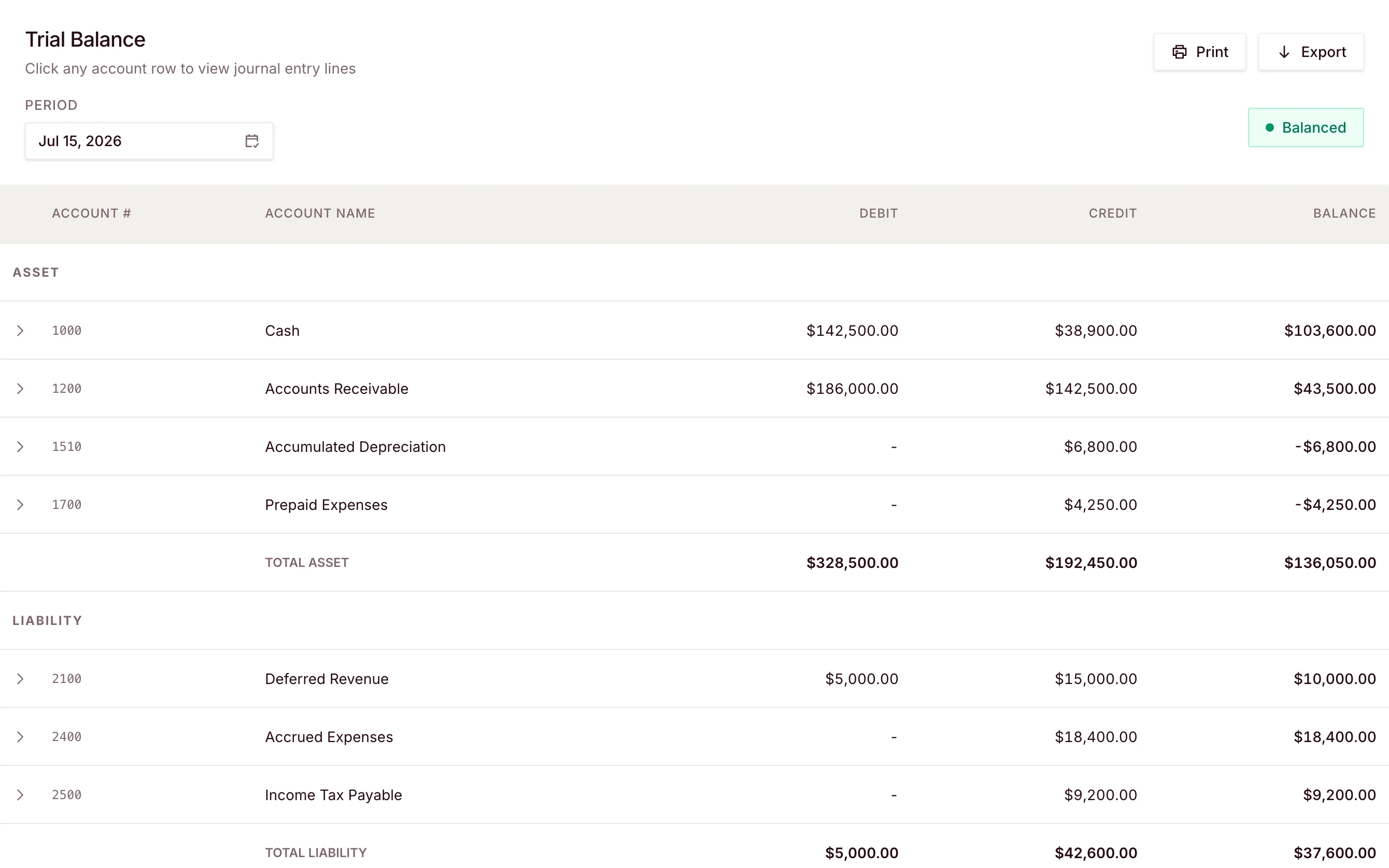
Having led transformations that reduced month-end reporting from 60 days to Working Day 2, I set my sights on Working Day Zero: a fully reconciled trial balance every morning.
 Jemma EwinCEO & Co‑Founder · Global CFOJemma Ewin, CEO & Co‑Founder · Global CFO
- 1Map and clean
Your chart of accounts is mapped and cleaned.
- 2Bring over
Opening balances by period and transaction history come across.
- 3Reconcile
Rivane reconciles the migrated data for you.
- 4Go live
Familiar workflows, upgraded with automation.
- One entity per file
- Revenue schedules in spreadsheets
- Close in workbooks
- Native multi-entity and multi-currency
- Revenue recognition in the ledger
- Close automation
Further reading
Questions
When should we move off QuickBooks?
Common triggers are adding entities, needing ASC 606 revenue recognition, tightening controls for an audit, or spending too much of the close in spreadsheets.
Is migration hard?
No. Rivane migrates and reconciles your chart of accounts, balances and history for you.
Will workflows feel familiar?
Yes. Day-to-day stays familiar while the manual parts get automated.
Does Rivane handle multiple entities and currencies?
Yes. Real-time consolidation and multi-currency are native, not a workaround.