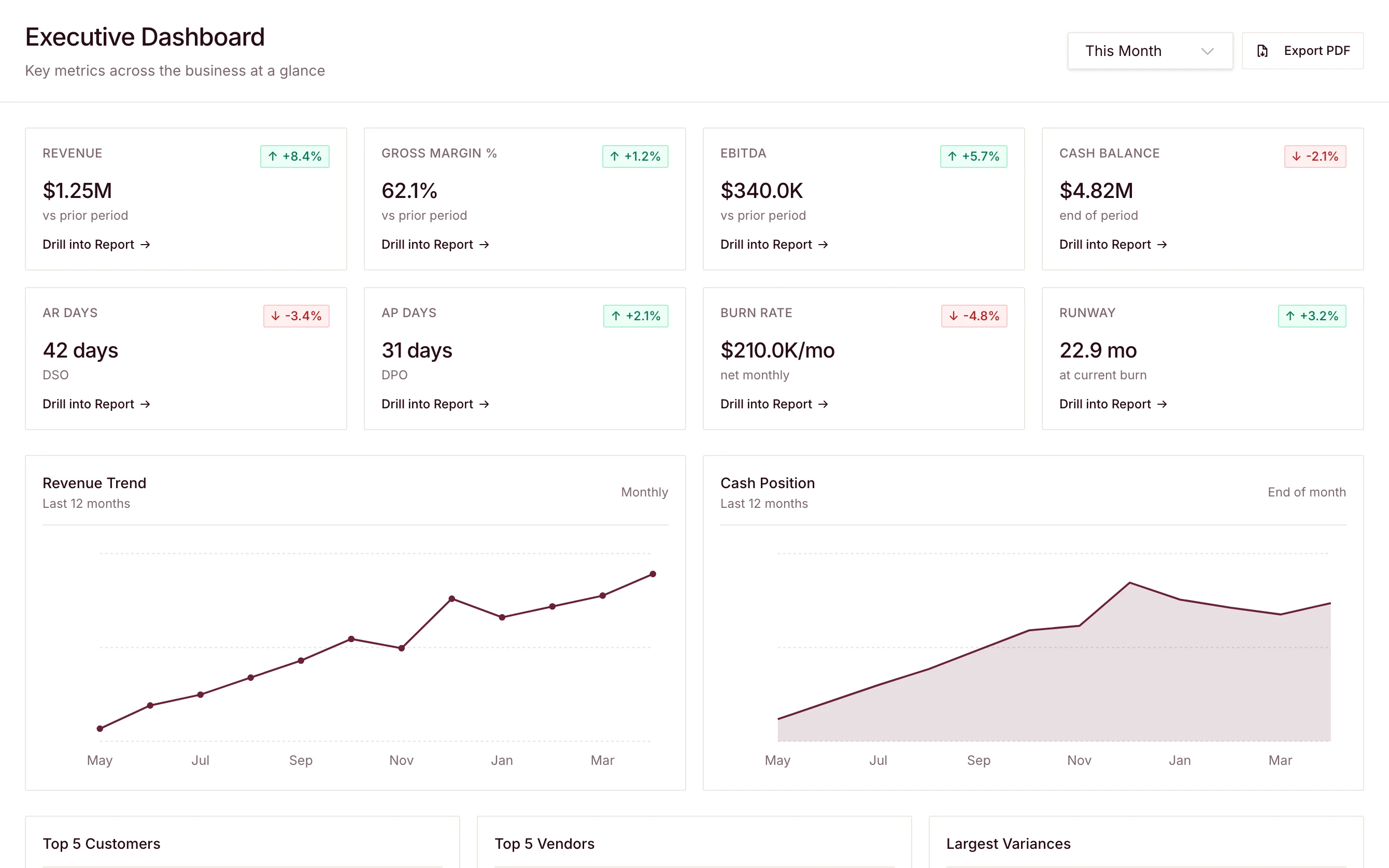
Rivane maintains your fixed asset register and calculates depreciation for you, with disposals and roll-forwards handled and tied to the ledger. Retire the depreciation spreadsheet.
- straight-line, declining balance, units of production
- 3 methods
- every asset tracked
- One register
- book and tax on one asset
- 2 schedules
One register for every asset you own
Capitalize an asset once and Rivane tracks its cost, in-service date, useful life, category and location. There is no parallel spreadsheet to keep reconciled against the ledger. Migrating? Bulk import brings an existing register across with cost and accumulated depreciation intact.
Depreciation posted every period
Choose a method per asset and Rivane computes and posts depreciation each period. Revise an estimate and the schedule recalculates prospectively, with the adjustment handled for you.
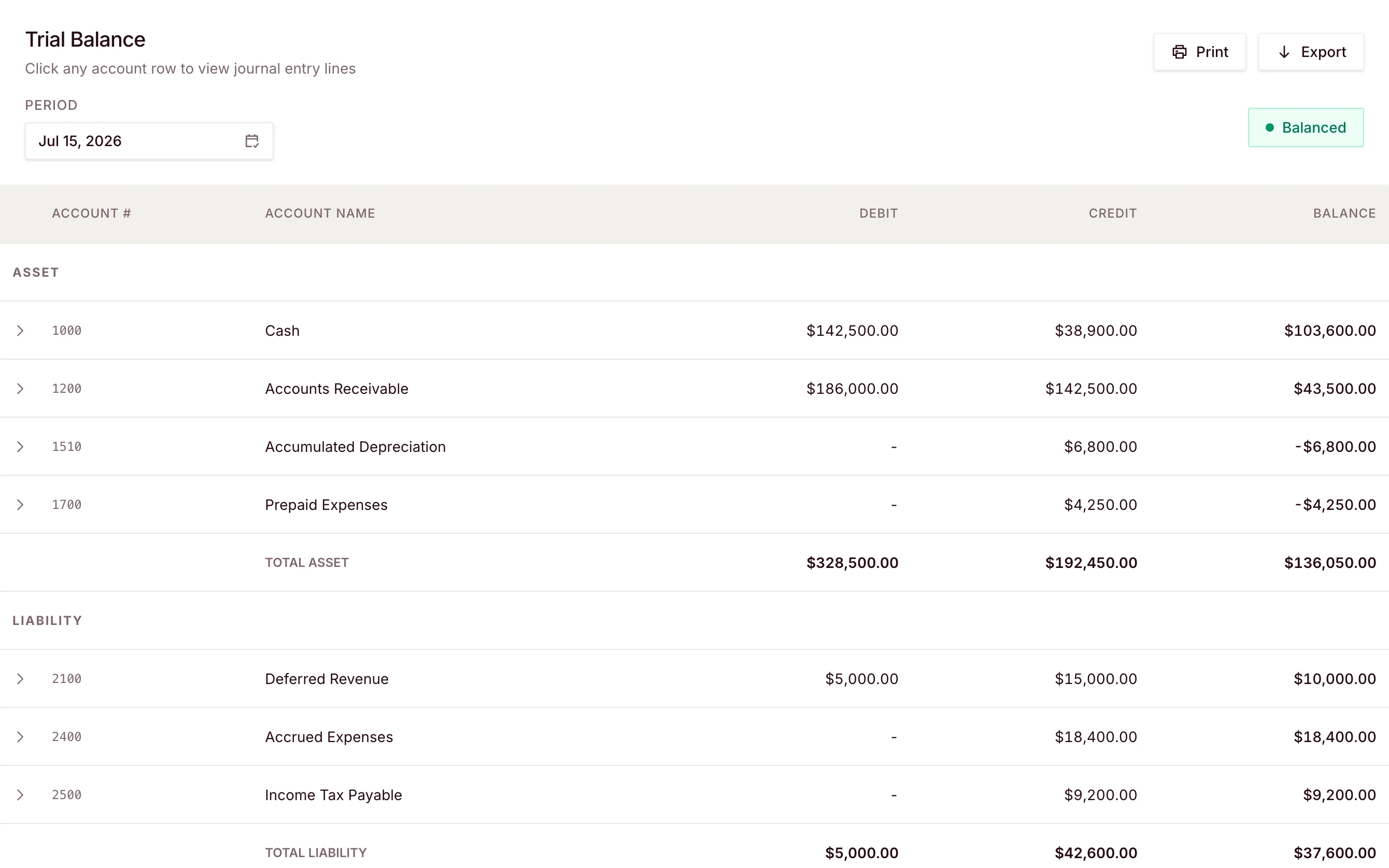
- Multi-book depreciation. Keep book and tax schedules separate on the same asset, with different methods per book.
- Disposals and write-offs. Sell or retire an asset and Rivane stops depreciation, calculates the gain or loss, and generates the entry.
- Construction in progress. Track CIP and componentized assets in the same register.
- Audit-ready. Every schedule and disposal entry is attributed and traceable.
- A standalone register
- Depreciation keyed each period
- Disposals booked by hand
- Roll-forward rebuilt each close
- One register, tied to the GL
- Depreciation computed and posted
- Disposal entry generated
- Roll-forward always current
- 1Capitalize
Add an asset with its cost, in-service date, useful life and coding, tied to the ledger from day one.
- 2Depreciate
Schedules compute by method and post each period.
- 3Adjust
Revised estimates, transfers and componentization recalculate the schedule and handle the catch-up.
- 4Retire
Disposals book the gain or loss and roll the register forward, reconciled to the GL for close.
Further reading
Questions
Which depreciation methods are supported?
Straight-line, declining balance and units of production, set per asset.
Can I keep separate book and tax schedules?
Yes. Multi-book depreciation keeps distinct book and tax schedules on the same asset in parallel.
How are disposals handled?
When an asset is sold or retired, Rivane stops depreciation and books the gain or loss with the journal entry generated for you.
Does the register reconcile to the ledger?
The asset and accumulated depreciation roll-forwards stay current and tie back to the general ledger, so month-end is a review rather than a rebuild.
Can I bring my existing register across?
Yes. Bulk import migrates an existing register with cost and accumulated depreciation intact.