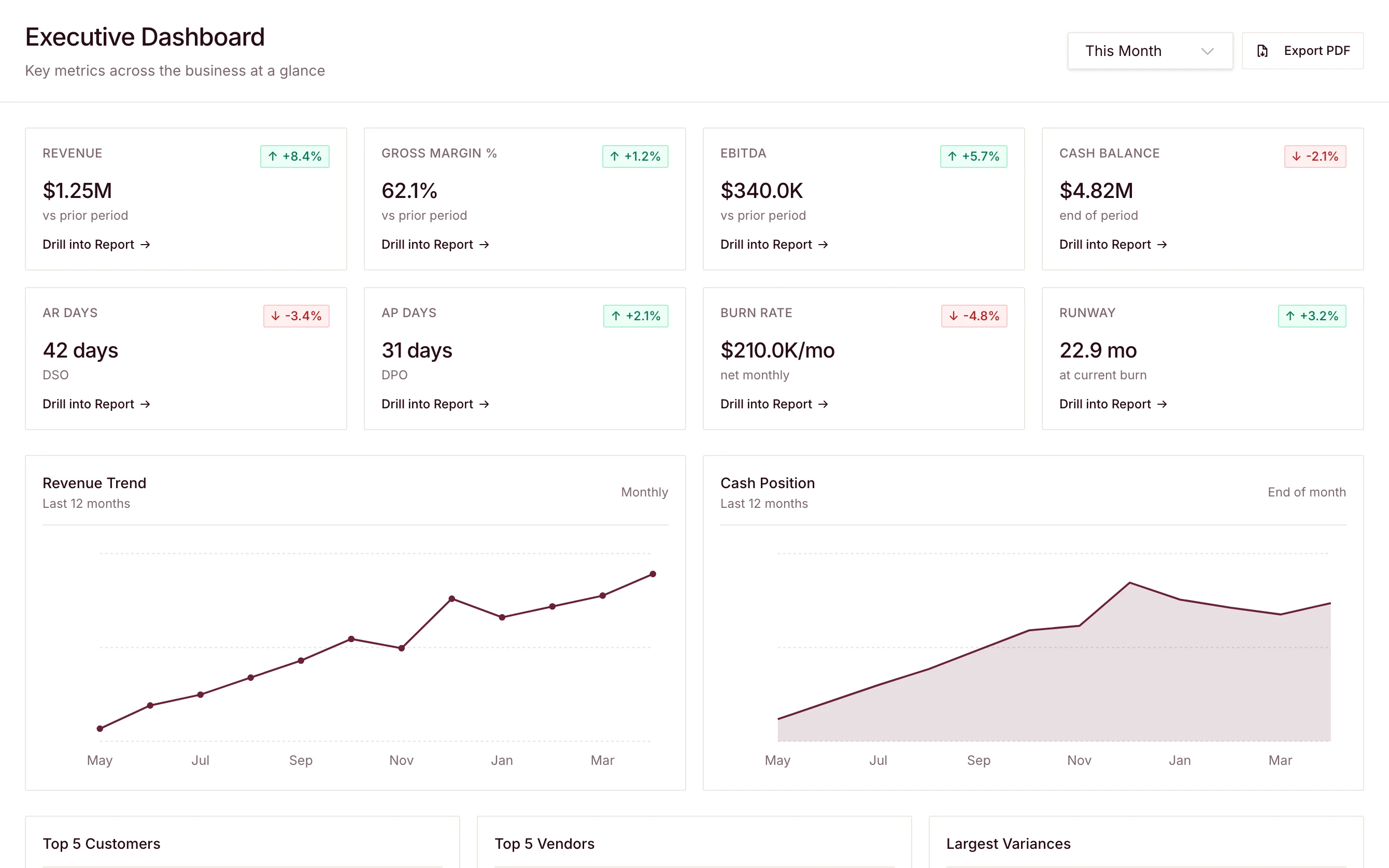
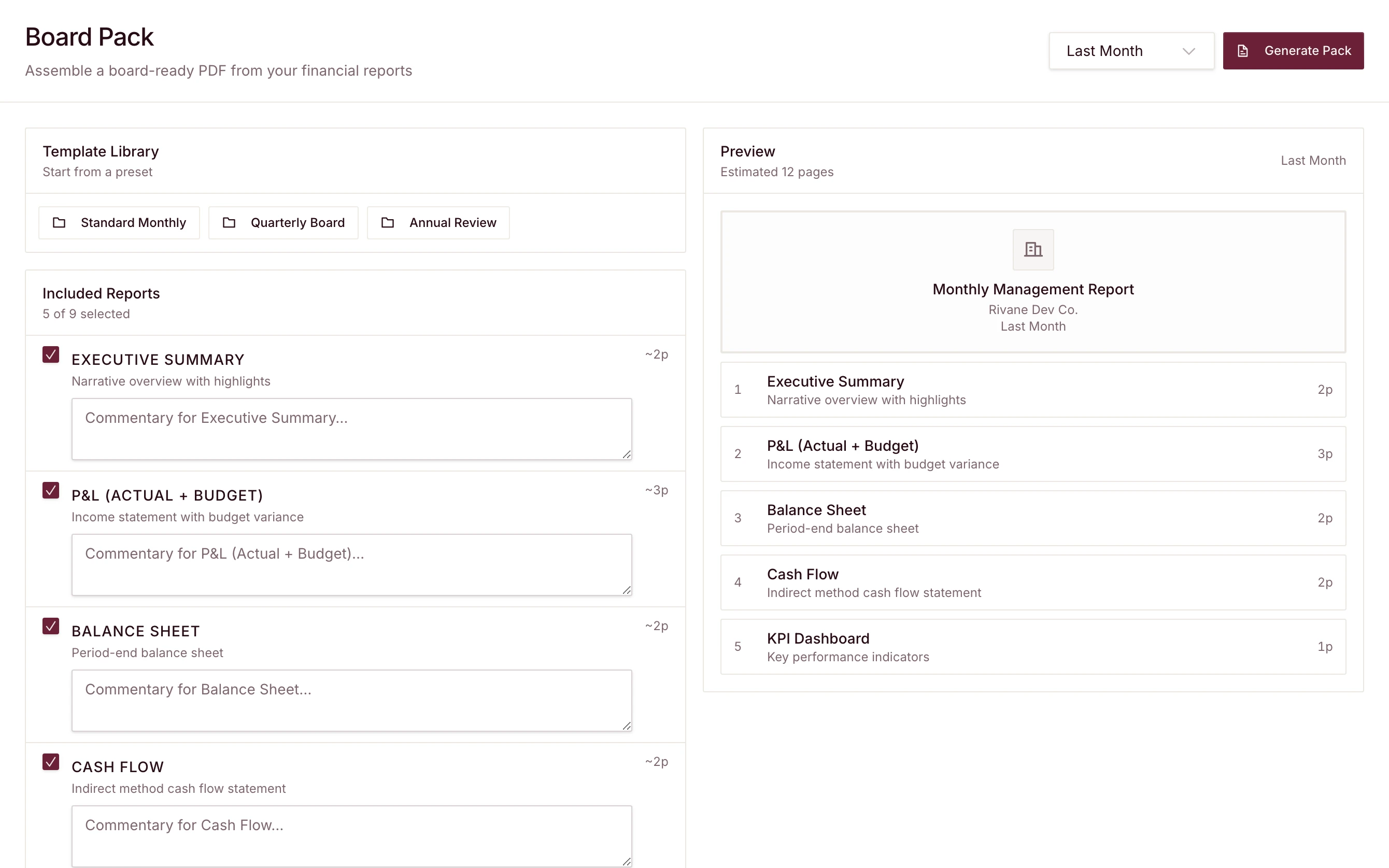
Rivane builds budgets, forecasts and plans on the same ledger your books run on. Budget-vs-actual refreshes as actuals post, with no export step.
- scenarios side by side: base, upside, downside
- 3
- driver types: headcount, volume, rate
- 3
- variance views: period, quarter, year to date
- 3
- plan version saved, labelled and comparable
- Every
Plans that keep up with the business
At Opal, Jemma ran annual budgeting for a A$10B sales budget, then rebuilt the annual, 2, 3, 5 and 10-year plans to Nippon standards.
Having led transformations that reduced month-end reporting from 60 days to Working Day 2, I set my sights on Working Day Zero: a fully reconciled trial balance every morning.
 Jemma EwinCEO & Co‑Founder · Global CFOJemma Ewin, CEO & Co‑Founder · Global CFO
Models built on drivers, not hardcoded cells
- Driver-based. Tie budget lines to headcount, units, price or usage. Change an assumption and the dependent lines recompute.
- Rolling forecasts. Roll the forecast forward each period and blend actuals with the remaining plan, without rebuilding the model.
- Departmental budgets. Owners plan their own lines with the access you set; finance rolls it up, with a history of who changed what.
Variance the moment an entry posts
- Manual actuals export each period
- Formulas rewired by hand
- A separate file per scenario
- Saved-as copies for versions
- Actuals live from the ledger
- Assumptions cascade automatically
- Scenarios compared side by side
- Versions tracked and labelled
- 1Model
Set the drivers and assumptions that shape each budget line.
- 2Submit
Department owners fill in their lines within the access and guardrails you set.
- 3Consolidate
Submissions roll up into one plan, with entity and dimension cuts.
- 4Track
Actuals post and variance refreshes in place, ready the day the books close.
Further reading
Questions
How does budget vs. actual stay current?
Plans sit on the same ledger as your actuals, so variance refreshes as entries post, with no export or import step.
What is driver-based planning?
Budget lines are tied to underlying drivers like headcount, volume and rate. Change an assumption and the dependent lines recompute automatically.
Can department owners build their own budgets?
Yes. Owners plan their own lines with the assumptions and access you set, and finance rolls everything up into one plan.
Does Rivane support multiple scenarios?
You can model base, upside and downside scenarios and compare them side by side, with every version saved and labelled.
Can I drill from a variance to the cause?
Yes. Drill from any variance straight to the transactions that caused it.