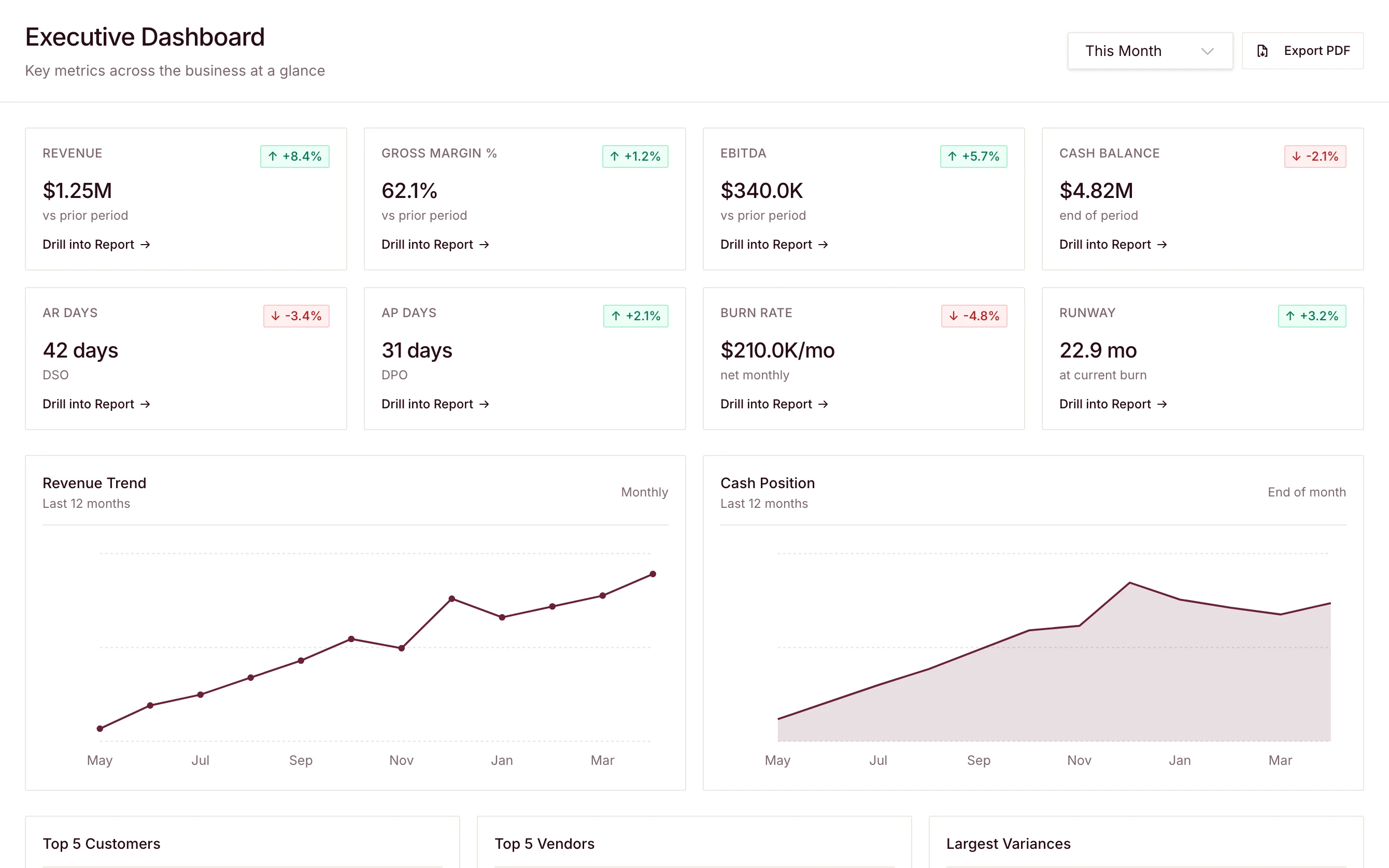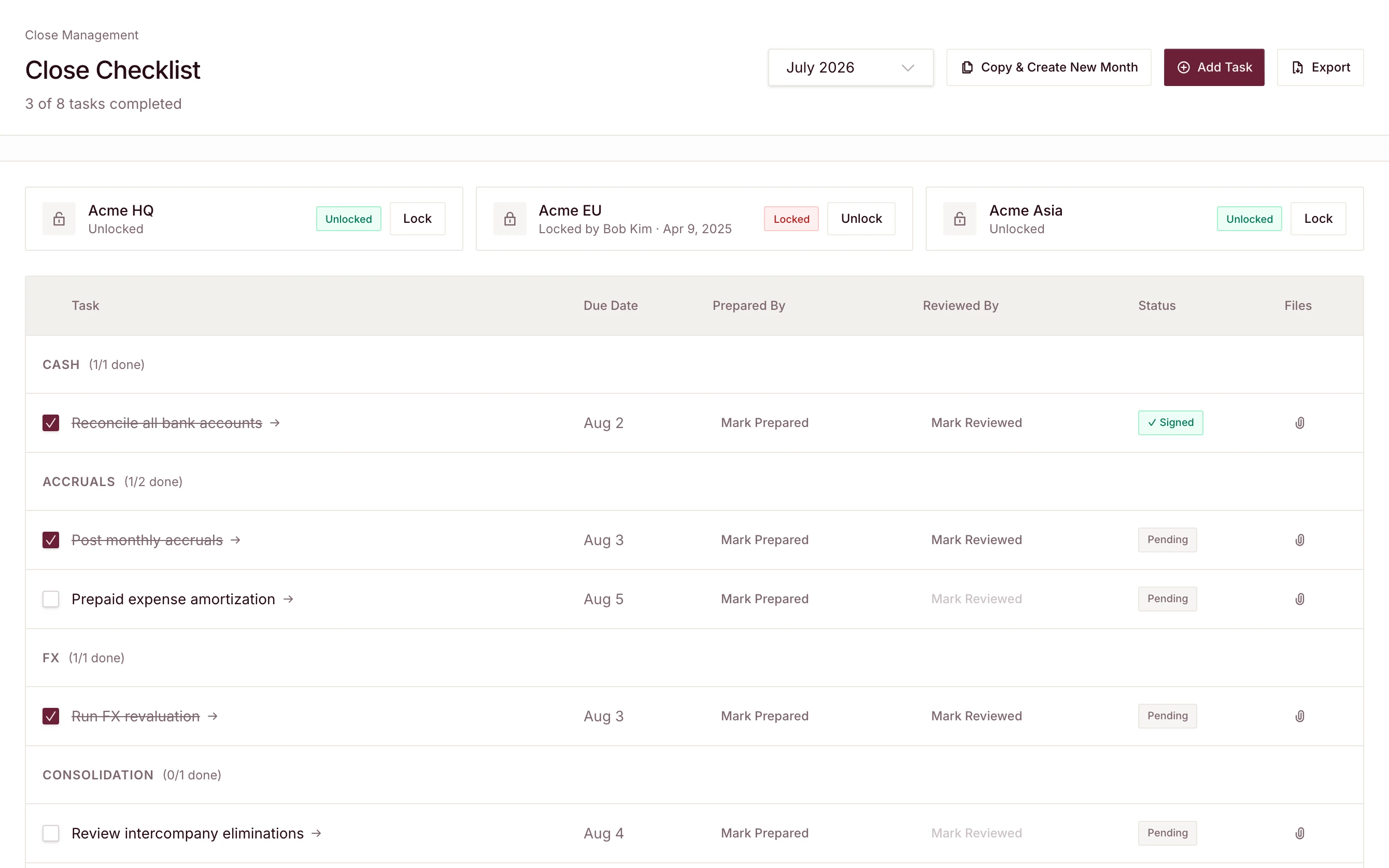
Close management is live in Rivane. The whole team works the month-end close from one checklist, and the books are ready when you need them, not days later.
Having led transformations that reduced month-end reporting from 60 days to Working Day 2, I set my sights on Working Day Zero: a fully reconciled trial balance every morning.
 Jemma EwinCEO & Co‑Founder · Global CFOJemma Ewin, CEO & Co‑Founder · Global CFO
- close as the goal
- Zero-day
- for every close task
- One place
- plan, execute, review, lock
- 4 stages
One checklist the whole team works from
Tasks, owners and due dates live in a single view. Dependencies sequence the work, so nothing starts before its inputs are ready and no one has to ask for a status update.
- Owner and due date on every task. Preparer and reviewer sit on each row.
- Dependency sequencing. Tasks unlock in the right order automatically.
- Live status. See exactly where the close stands at any moment.
- Recurring templates. Roll last month forward and the checklist rebuilds itself.
Most of the work is already done
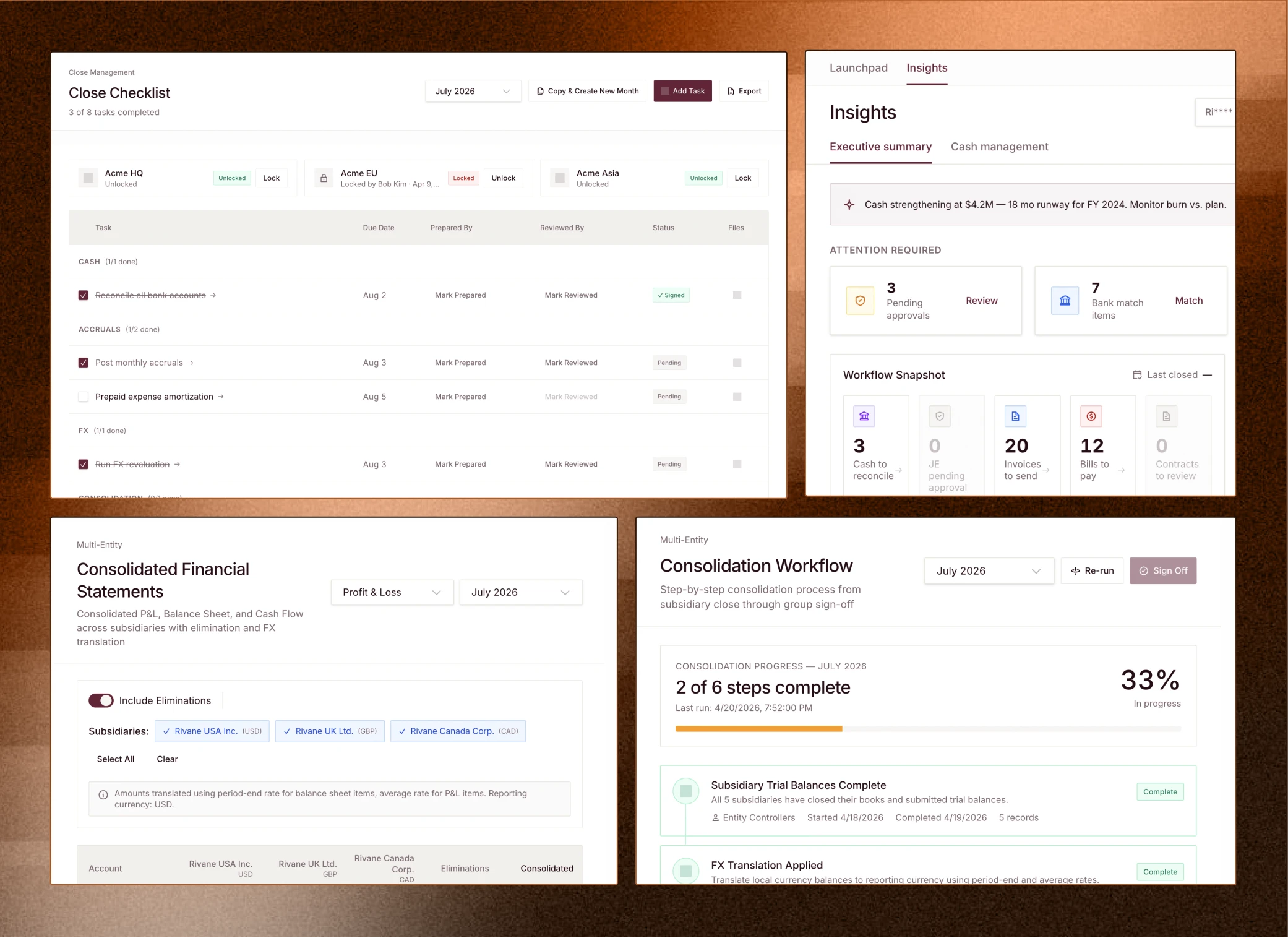
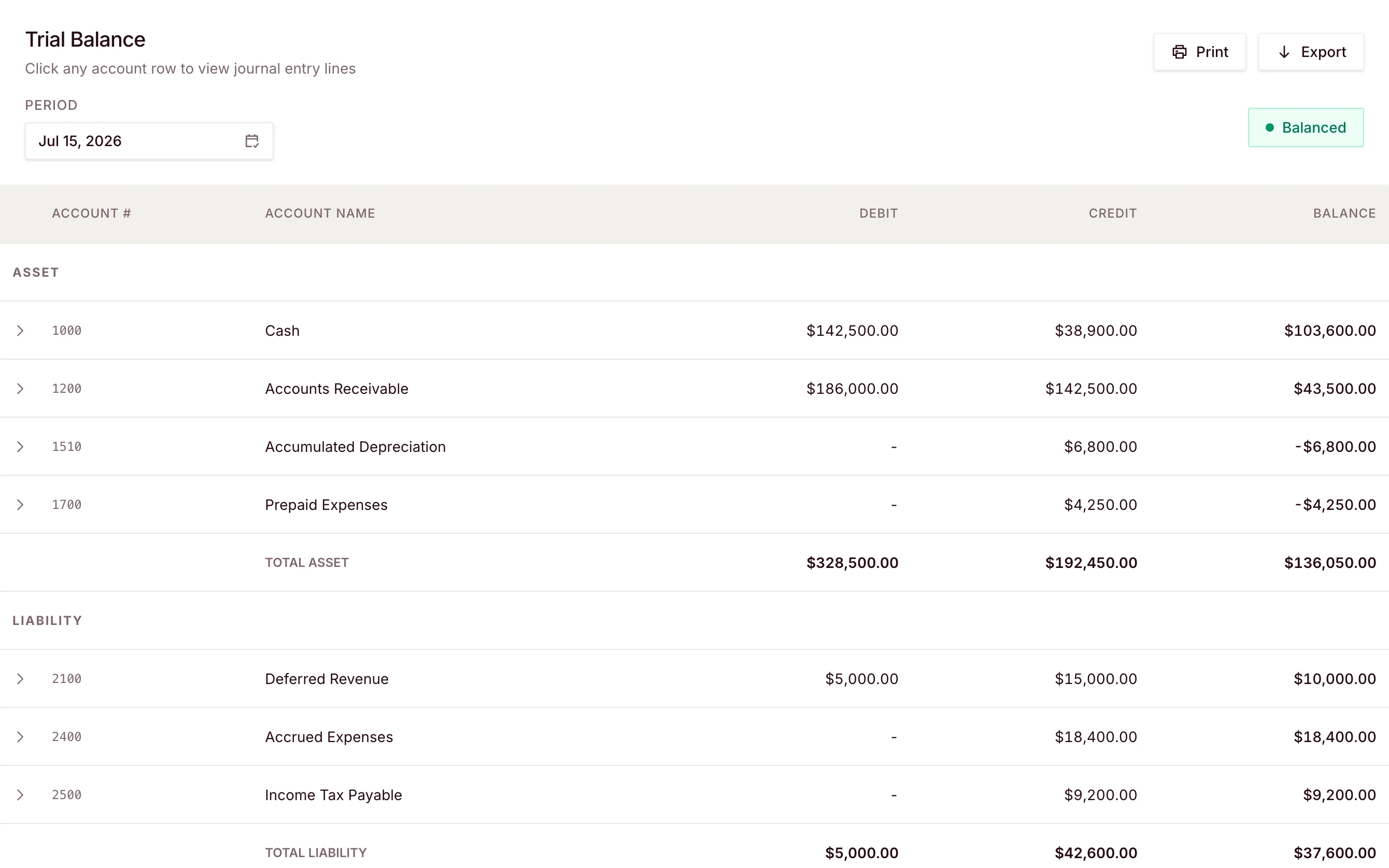
Reconciliation and validation run all month, inside the close flow. Anomalies are flagged before close day, so month-end is a review, not a scramble. The closer you get to a continuous close, the shorter close day becomes.
- Status chased over email
- Tasks started before inputs are ready
- Reconciliations done at month-end
- Sign-off scattered across inboxes
- One live status for everyone
- Dependencies sequence the work
- Reconciliations run all month
- Timestamped approvals in place
From first task to final lock
- 1Plan
Last month rolls forward into a fresh checklist with owners, due dates and dependencies set.
- 2Execute
Tasks unlock in dependency order and reconciliations run inside the flow as the team works.
- 3Review
Reviewers see what changed and approve in place, with a timestamped trail.
- 4Lock
With the books tied out, the period locks and exports an audit-ready record in one step.
Further reading
Questions
How is this different from a spreadsheet checklist?
Rivane sequences dependencies, tracks status live, and runs reconciliations inside the flow. A static spreadsheet does none of that.
What is a continuous close?
Running reconciliation and validation throughout the month, so the books stay close-ready and month-end becomes a short review.
Can I reuse last month’s close plan?
Yes. Recurring templates roll forward, so each period rebuilds the checklist for you.
Is sign-off audit-ready?
Every review and approval is captured with owner and timestamp, producing an audit-ready record.
Can I see where the close slows down?
Close analytics track cycle time, per-task duration and recurring blockers across periods.